
Polite & Controlled
Small batches, configurable sleep intervals, per-item cooldowns, and hourly API caps. Houndarr searches slowly and politely so your indexers stay healthy.
Missing, Cutoff & Upgrade
Automatically searches for missing episodes, movies, albums, and books, plus items below your quality cutoff. An optional upgrade pass re-searches completed items for better releases. Each search type has independent controls and budgets.
Multi-Instance
Connect one or more Radarr, Sonarr, Lidarr, Readarr, and Whisparr instances, each with their own batch size, sleep interval, cooldown, and hourly cap settings.
No Telemetry
Zero outbound connections to analytics, error tracking, or developer-controlled servers. The only network traffic goes to your own *arr instances.
Encrypted API Keys
API keys are encrypted at rest with Fernet (AES-128-CBC + HMAC-SHA256) and are never sent back to the browser. Authentication uses bcrypt, signed sessions, and CSRF protection.
Single Docker Container
Runs as a single container alongside your existing *arr stack. SQLite database, non-root execution, and a dark-themed web UI built with FastAPI, HTMX, and Tailwind CSS.
Why Houndarr?
Radarr, Sonarr, Lidarr, Readarr, and Whisparr monitor RSS feeds for new releases, but they do not go back and actively search for content already in your library that is missing or below your quality cutoff. Their built-in "Search All Missing" button fires every item at once, overwhelming indexer API limits.
Houndarr searches slowly, politely, and automatically: small batches, configurable sleep intervals, per-item cooldowns, and hourly API caps. It runs as a single Docker container alongside your existing *arr stack.
See It in Action
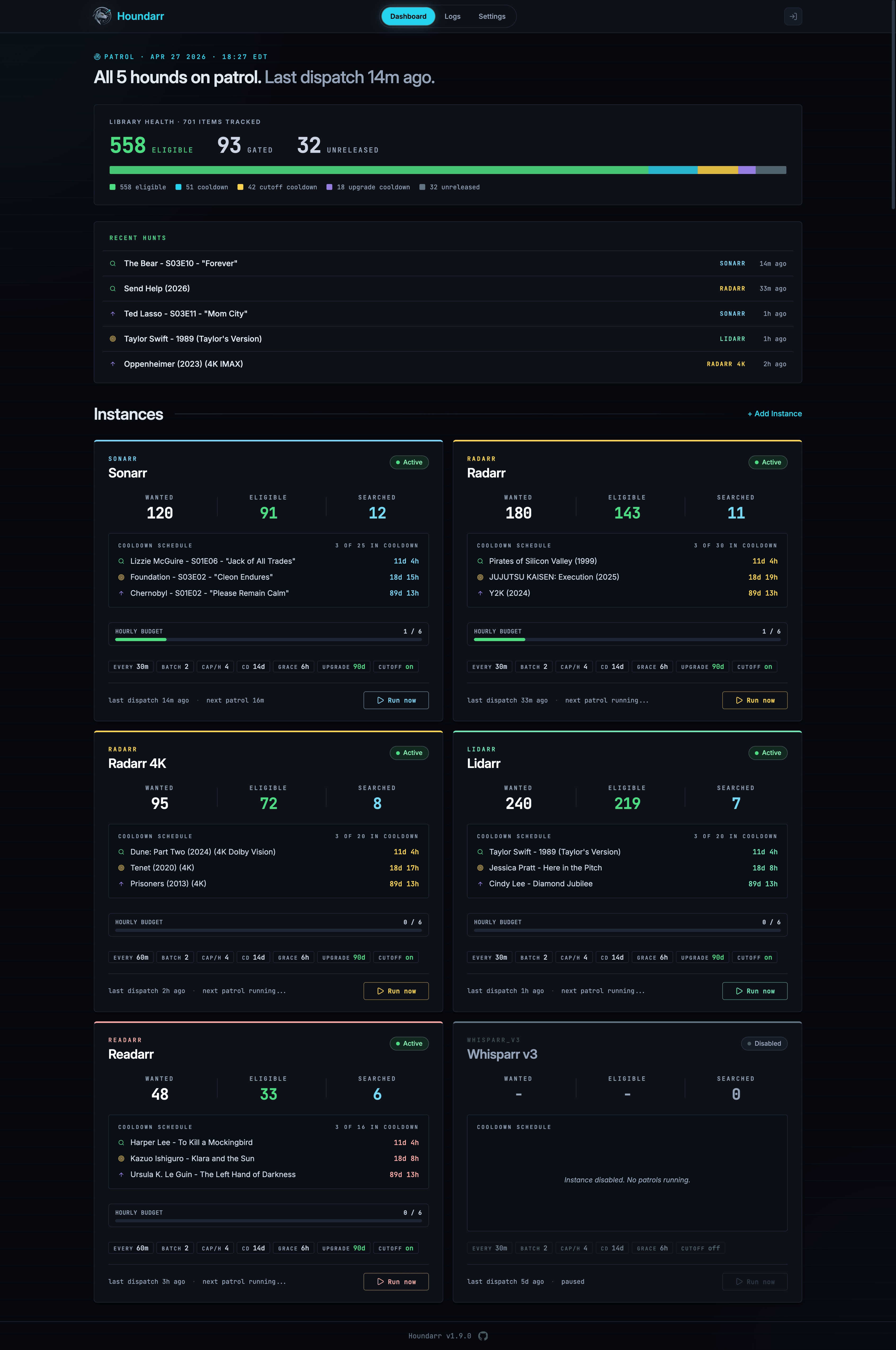
Dashboard: gating state at a glance, per-instance Cooldown schedule panels, on-demand Run Now
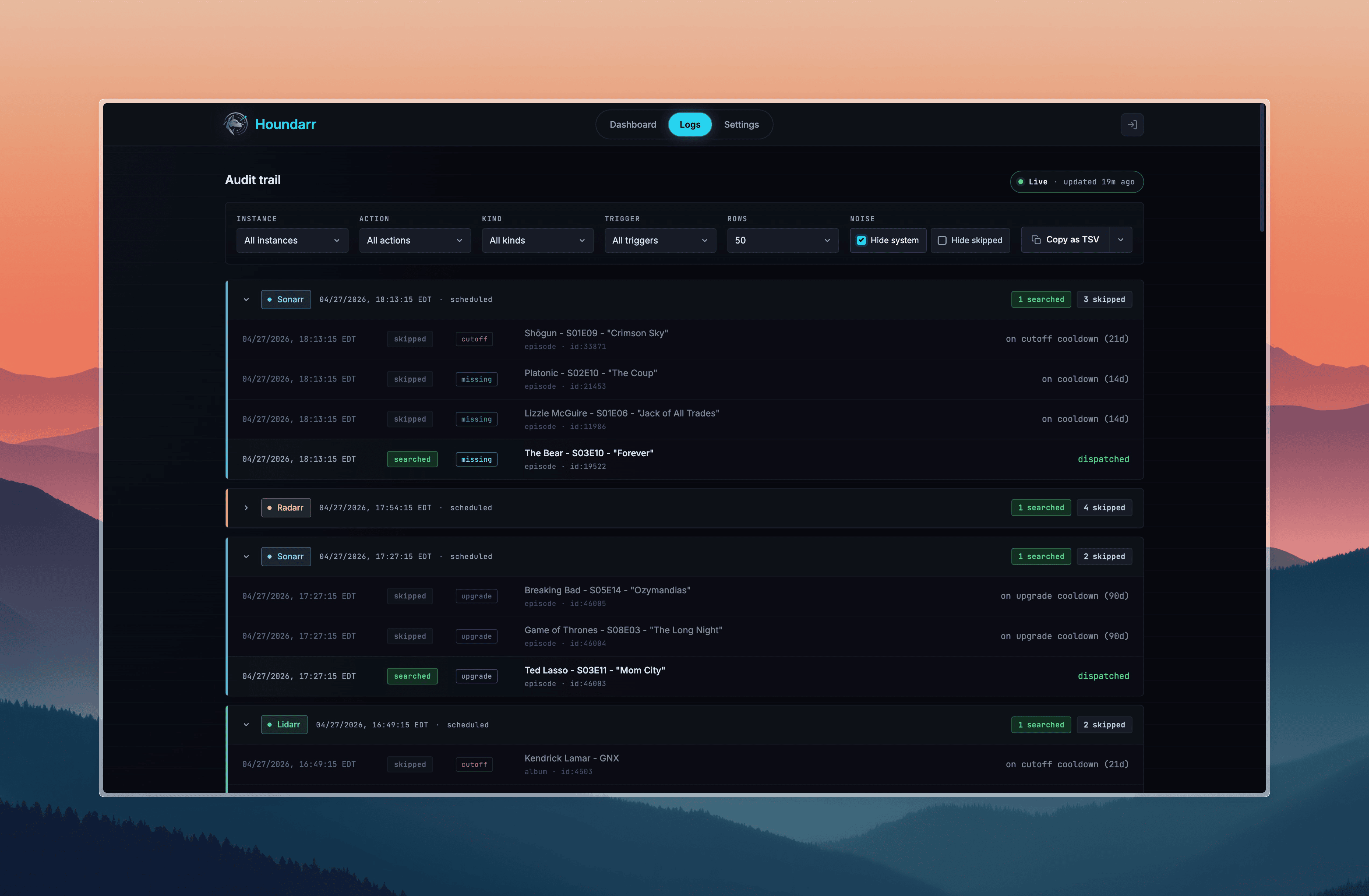
Logs
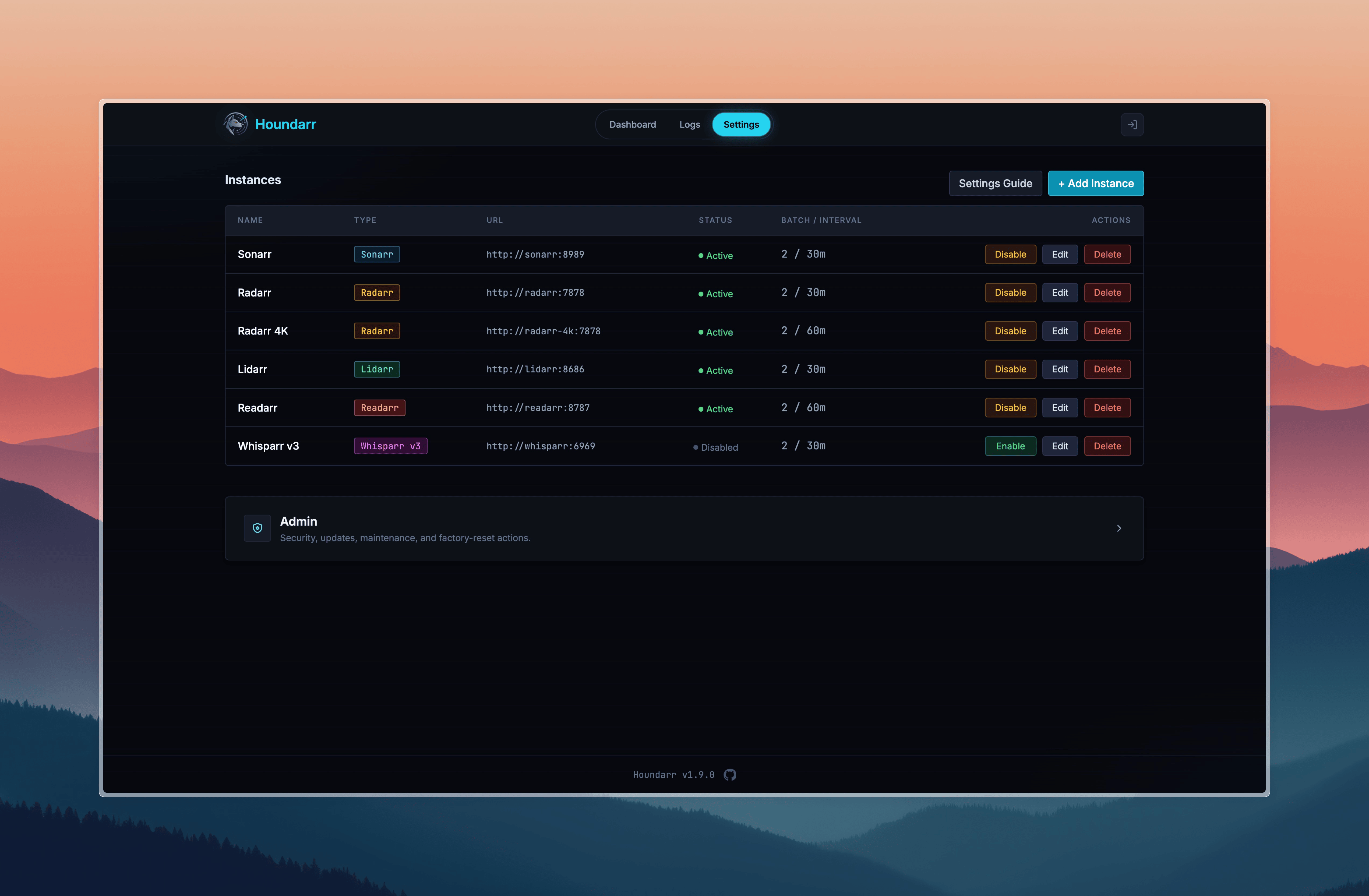
Settings
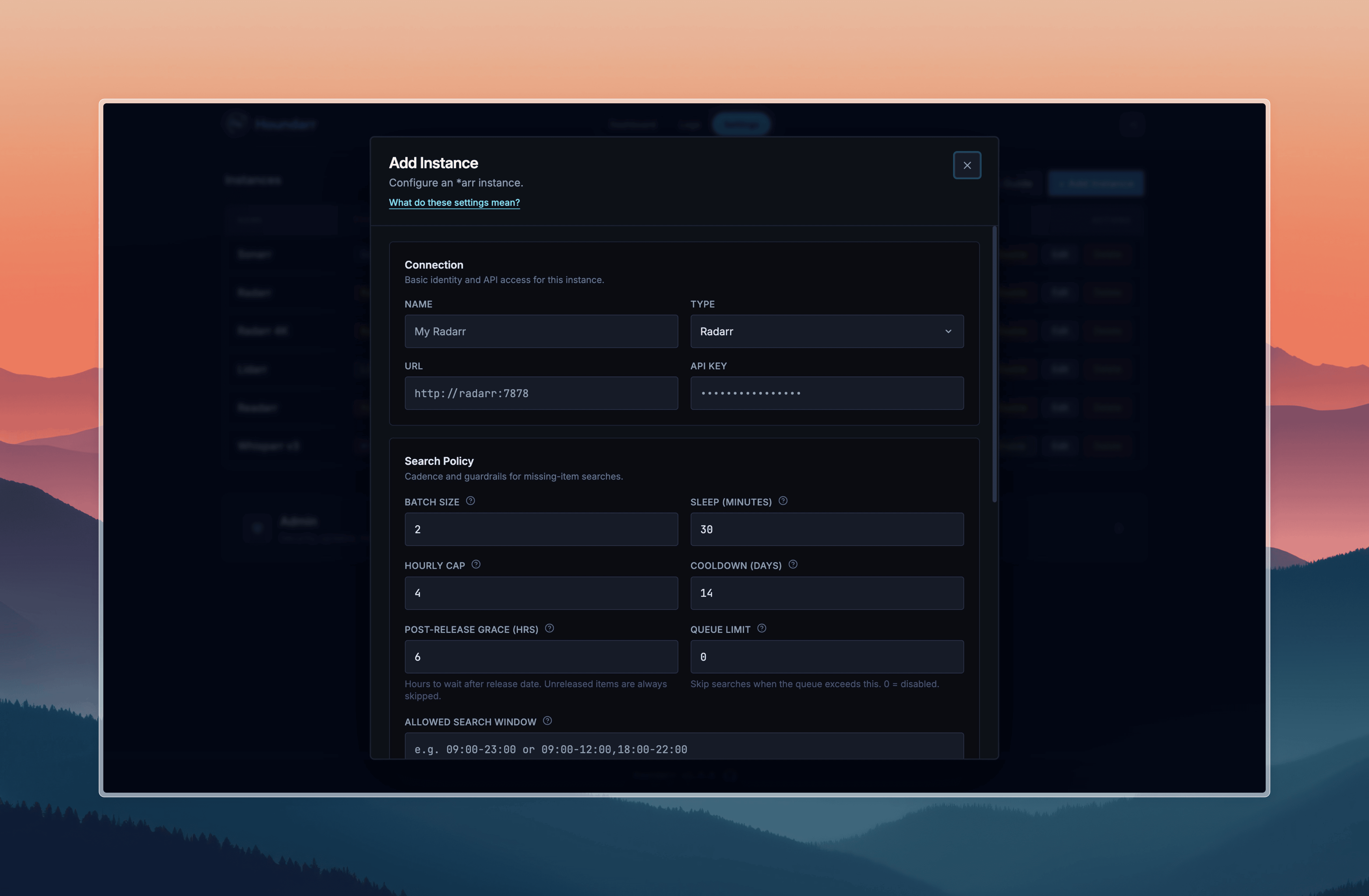
Instance config
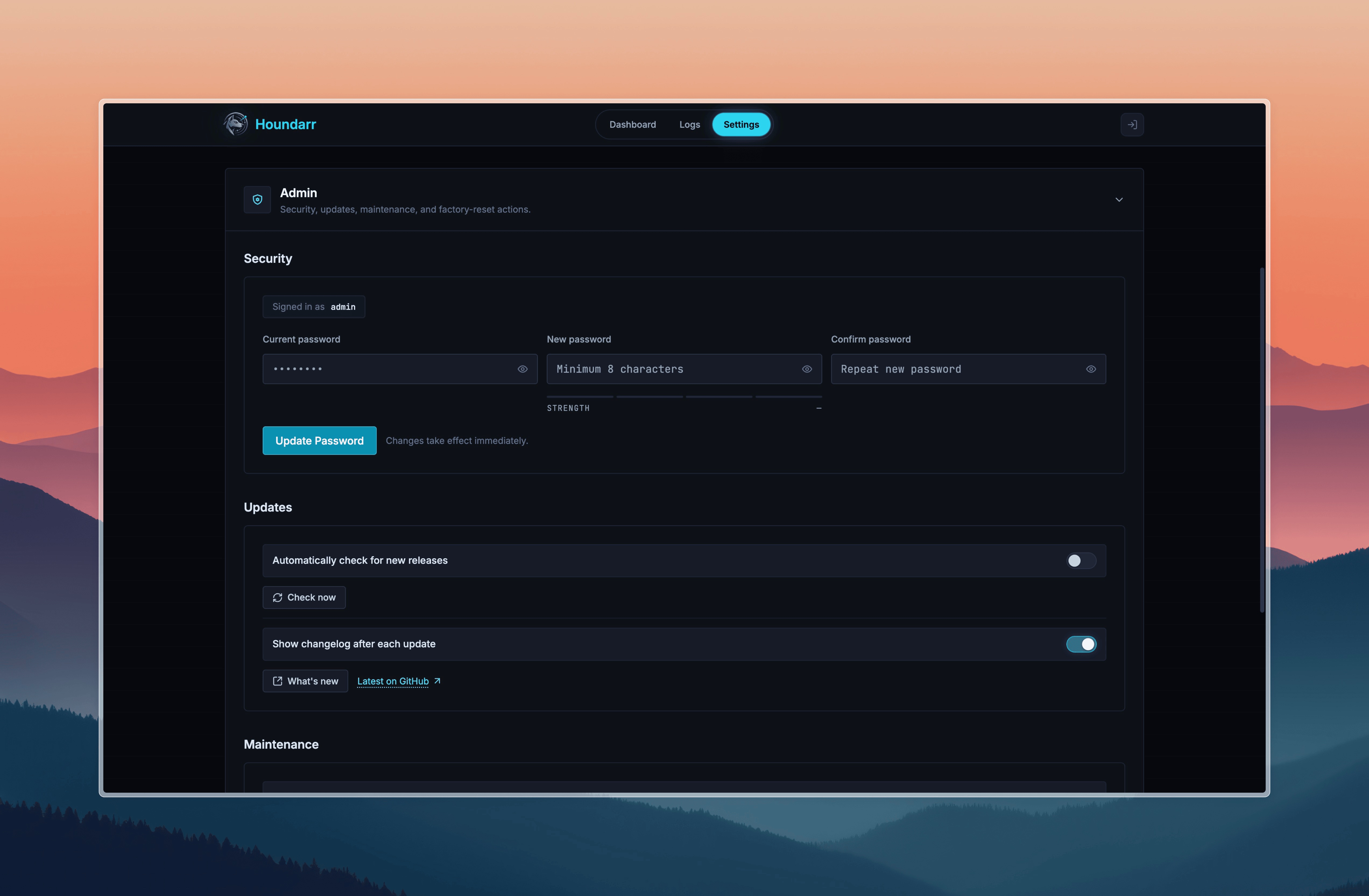
Admin
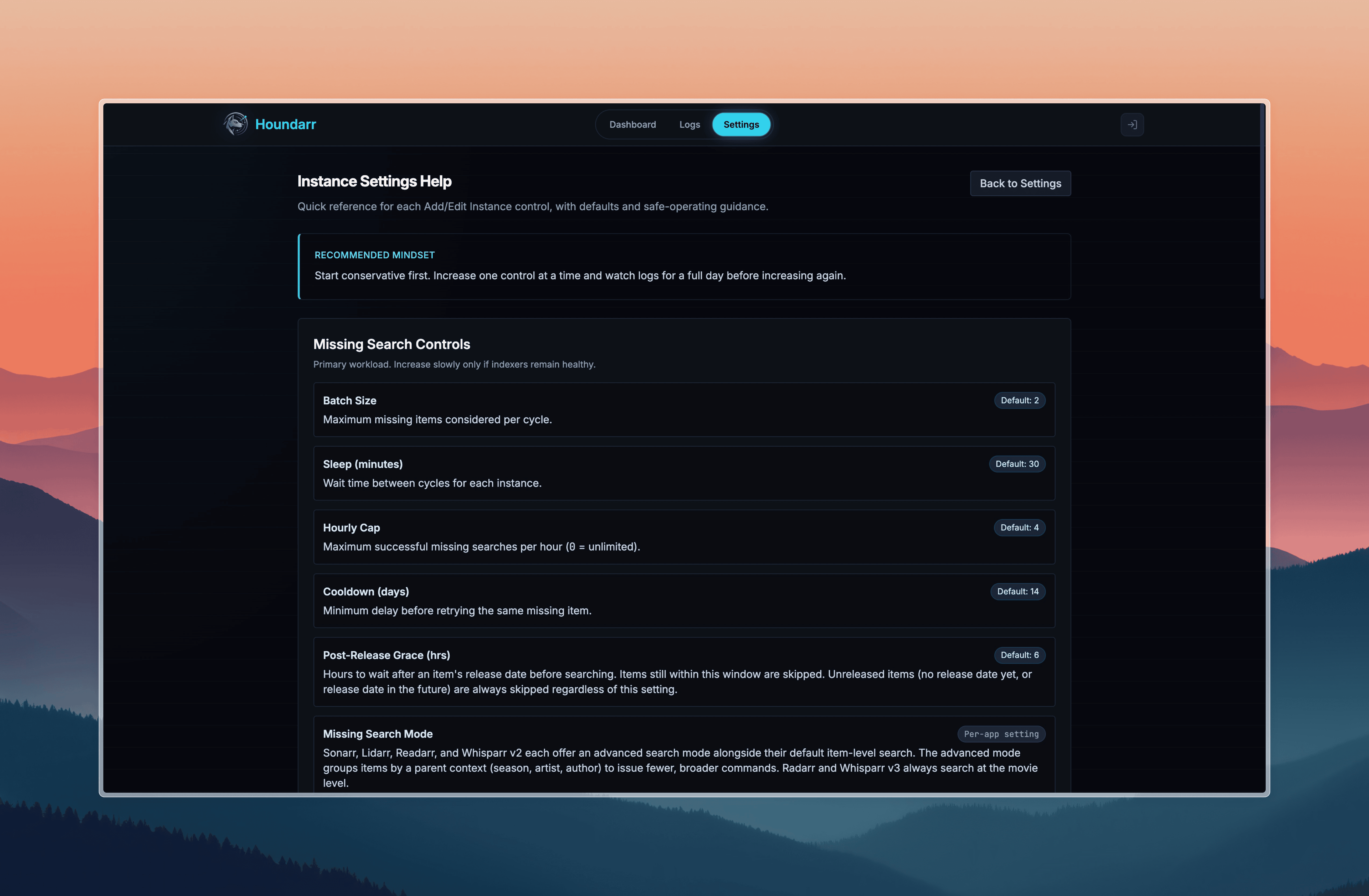
Help
Focused by Design
- No download-client integration: it triggers searches in your *arr instances, which handle downloads
- No Prowlarr/indexer management: your *arr instances manage their own indexers
- No request workflows: no Overseerr/Ombi-style request handling
- No multi-user support: single admin username and password
- No media file manipulation: it never touches your library files